
knest.ai • Property intelligence for home buyers
Buying a House in a Flood-Prone Area: How to Check Risk, Insurance and Value
A flood-prone tag isn't a reason to walk away on its own, but flood is the one site risk you must check yourself. Here's how to check any address, whether you can insure it, and how to decide.
A "flood-prone" tag isn't automatically a reason to walk away. Plenty of good homes sit on land that can flood, and they're bought and sold every week. But flood is the one site risk you have to check yourself, because the listing won't raise it. The cost of getting it wrong runs to tens of thousands of dollars, and sometimes to whether you can insure the place at all.
This guide is the practical version: how to check a specific address, whether you can insure a flood-prone home and what that costs, what a flood overlay does to building, and how to decide. It's one part of your wider land and site-risk due diligence.
- “Flood-prone” means land that can be inundated. It’s shown on council and state flood maps and flagged on planning overlays; check it by address before you offer.
- You can usually insure a flood-prone home, but cover isn’t automatic. Australian policies use one standard flood definition (since 2012); read the PDS and get a real quote early.
- A flood overlay can trigger a planning permit and controls like a minimum floor level on building or major renovation.
- Flood risk can weigh on value: one controlled study found about a 10.8% discount in the highest-risk zone. It depends on the property, so ask a valuer.
- Then decide: proceed, add a condition to the contract, or walk.
What makes an area "flood-prone"?
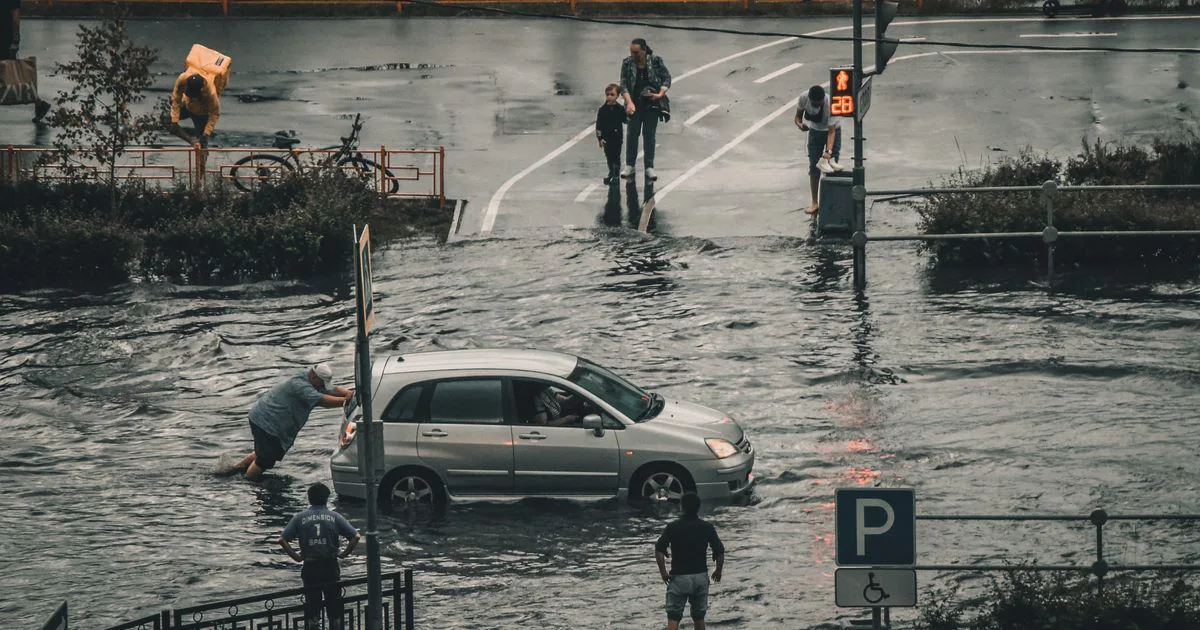
"Flood-prone" means land that can be covered by water in a flood, and it comes in a few forms. The Bureau of Meteorology describes riverine flooding as "when rivers break their banks", which "can happen weeks or months after rain, sometimes hundreds of kilometres away". Flash flooding, by contrast, "happens within 6 hours of rain falling", when water can't soak away fast enough. Near the coast, a storm surge, "a rise above the normal seawater level" driven by winds and low pressure, can push seawater inland.
Which type matters, because it changes the warning time and the damage. A flash-flood creek gives you minutes; a riverine river system gives hours or days. Councils and state agencies map these hazards, and planning schemes flag the affected land with overlays. That mapping is public, and it's what you check before you offer.
How do I check if a property is in a flood zone?
You check by address, using the council or state tool for where you're buying, and you treat the local council as the authority for property-level answers. The tools differ by state:
| State | Where to check | What it shows |
|---|---|---|
| QLD | Brisbane’s Flood Awareness Map (by address); statewide FloodCheck | Property-level flood summary in Brisbane; FloodCheck is a regional flood-study locator, not a property-level answer |
| NSW | Section 10.7 planning certificate; NSW SES Flood Data Portal | The certificate lists the “level of flooding”; the portal shares council flood data |
| VIC | VicPlan (by address); Melbourne Water | Planning zones and overlays, including land “subject to flooding” |
Two cautions the agencies themselves flag. Queensland's FloodCheck "should not be used to determine the potential for flooding at the property level". And the NSW SES portal notes that "responsibility for providing flood information to the public remains with Local Council". So use the maps to get oriented, then confirm the property-level detail with the council and your conveyancer.
Can you insure a flood-prone house, and what does it cost?
Usually you can, but cover isn't automatic and the price varies with the risk. Since 2012, Australian home insurance has used one standard legal definition of flood: water escaping "the normal confines of… any lake, or any river, creek or other natural watercourse… or any reservoir, canal, or dam" (ASIC Moneysmart). That ended the old confusion where "flood" meant different things in different policies.
What it means for a buyer is simple. ASIC Moneysmart warns that where "a property faces high flood risk, your insurance costs will be higher – or flood cover might be excluded from your policy". So flood cover is not a given. Check the product disclosure statement (PDS) and, more usefully, get a real quote on the specific address before you're committed. An unaffordable premium or a refusal is a risk signal a map can't give you. It's also the sharp end of the climate picture: a 2022 Climate Council analysis estimated around 1 in 25 Australian homes could be "effectively uninsurable" by 2030.
In the buyer prep we see at knest.ai, flood exposure is often discovered not in the listing but in the insurance quote, when the premium comes back two or three times higher than expected. Getting that quote early, not after you've signed, is the cheapest protection on this list.
What does a flood overlay mean for building or renovating?
A flood overlay isn't just a warning label; it can control what and how you build. In Victoria, the Land Subject to Inundation Overlay and its siblings each "requires a planning permit for buildings and works", and the council "must specify a minimum floor level", typically a freeboard "of at least 300 mm above the 100-year ARI flood level" (Planning Victoria; Melbourne Water). Councils in other states set their own controls, but the pattern is the same: build higher, and get a permit. For how a flood overlay shows up on the title, see planning certificates and overlays.
For a buyer, that shapes any plan to extend, renovate or knock-down-rebuild. A flood overlay can add cost and limit the design, so if your plans depend on major works, check the controls with the council before you assume they're possible.
Does flood risk lower property value?
It can, and unlike a lot of property "facts", there's controlled research behind this one. A 2024 Australian study by researchers at the University of Technology Sydney found homes in the highest-risk flood zone sold at about a 10.8% discount, mid-risk zones at about 4.4%, and the lowest-risk zone at no measurable discount, once other factors were held equal (Shi, Bangura & Ghosh, UTS, 2024).
Estimated discount by flood-risk zone, holding other factors equal. Source: Shi, Bangura & Ghosh, University of Technology Sydney, 2024. AEP 100 means a 1% chance of that flood level in any year (a "1-in-100-year" flood).
Read it as a controlled study of past sales, not a guaranteed discount on any one home. The effect is real but property-specific: a home that's flooded before, or sits low in a severe zone, is a different case from one clipped by a rare overlay. For a specific property, a valuer prices it; the wider market backdrop is that Australia's National Climate Risk Assessment (2025) projects climate could cut residential property values by around $611 billion by 2050.
Should you buy a flood-prone house?
There's no blanket answer, and "flood-prone" alone shouldn't decide it. What should is the combination of four things: how often and how severely the land floods (a rare 1-in-1000 overlay is not a frequent creek), whether you can insure it and at what cost, what the overlay limits if you plan to build, and whether the price already reflects the risk. None of this is theoretical. The 2022 NSW and Queensland floods were the costliest flood in Australian history: more than $4.8 billion in insured losses across about 225,000 claims (Insurance Council of Australia). Flood is one of several land checks worth making, alongside the rest of your site-risk due diligence.
So do the checks, then make a clear-eyed call: proceed, add a condition to the contract (subject to a satisfactory flood and insurance check), or walk. knest.ai helps you surface the flood signals by address and prepare the questions; your conveyancer, insurer and a valuer confirm the answers.
Frequently asked questions
How do I check if a house is in a flood zone?
Check by address using the council or state tool for where you're buying: Brisbane's Flood Awareness Map, NSW's section 10.7 certificate and SES flood portal, or Victoria's VicPlan. Treat the local council as the authority for property-level flood answers, and have your conveyancer confirm it.
Can you get insurance on a flood-prone house?
Usually yes, but cover isn't automatic. Australian policies use one standard flood definition (since 2012), and high flood risk can mean a much higher premium or flood cover being excluded. Read the PDS and get a real quote on the address before you commit.
Does a flood overlay stop me building?
Not necessarily, but it can impose controls. In Victoria a flood overlay requires a planning permit and a minimum floor level, typically 300 mm above the 1-in-100-year flood level. Other states set their own rules, so check with the council before planning major works.
Does flooding lower a property's value?
It can. A 2024 UTS study found about a 10.8% discount in the highest-risk flood zone and 4.4% in mid-risk zones, holding other factors equal. The effect is property-specific, so ask a valuer for a specific home rather than applying a flat figure.
Is it worth buying a house that's flooded before?
It depends on how severe and frequent the flooding is, whether you can insure it affordably, and whether the price reflects the risk. Do the flood and insurance checks first, then decide to proceed, add a contract condition, or walk away.
Sources
- ASIC Moneysmart, Storm, flood and fire insurance, retrieved 2026-07-29, https://moneysmart.gov.au/home-insurance/storm-flood-and-fire-insurance
- Treasury, Standard definition of flood, retrieved 2026-07-29, https://treasury.gov.au/consultation/standard-definition-of-flood
- Bureau of Meteorology, Flood Knowledge Centre (About floods), retrieved 2026-07-29, https://www.bom.gov.au/resources/learn-and-explore/flood-knowledge-centre/about-floods
- Bureau of Meteorology, Explainer: what is coastal inundation?, retrieved 2026-07-29, https://media.bom.gov.au/social/blog/2031/explainer-what-is-coastal-inundation/
- Brisbane City Council, Flood information frequently asked questions, retrieved 2026-07-28, https://www.brisbane.qld.gov.au/community-support-and-safety/natural-disasters-and-emergencies/flooding-in-brisbane/flood-information-frequently-asked-questions
- Queensland Government, FloodCheck Queensland, retrieved 2026-07-28, https://floodcheck.information.qld.gov.au/
- NSW SES, NSW Flood Data Access, retrieved 2026-07-29, https://www.ses.nsw.gov.au/flood-resources/nsw-flood-data-access/nsw-flood-data-access
- NSW Government Planning Portal, Online Section 10.7 Planning Certificate Service, retrieved 2026-07-28, https://www.planningportal.nsw.gov.au/development-and-assessment/post-consent-certificates/online-section-107-planning-certificate-service
- Melbourne Water, Flood planning controls explained, retrieved 2026-07-29, https://www.melbournewater.com.au/building-and-works/flooding-information-and-advice/flood-planning-controls-explained
- Planning Victoria, Land Subject to Inundation Overlay (clause 44.04) guidance, retrieved 2026-07-29, https://www.planning.vic.gov.au/__data/assets/pdf_file/0016/93112/T14-FT117-3.9-Land-Subject-to-Inundation-Overlay.pdf
- Shi, Bangura & Ghosh (University of Technology Sydney), How flood risk affects home values (International Journal of Disaster Risk Reduction), 2024, retrieved 2026-07-29, https://www.uts.edu.au/news/2024/11/how-flood-risk-affects-home-values
- Climate Council, Uninsurable Nation: Australia's most climate-vulnerable places (2022), retrieved 2026-07-29, https://www.climatecouncil.org.au/resources/uninsurable-nation-australias-most-climate-vulnerable-places/
- Australian Government (DCCEEW), National Climate Risk Assessment (2025), via Climate Council briefing, retrieved 2026-07-29, https://www.climatecouncil.org.au/resources/briefing-paper-national-climate-risk-assessment-ncra/
- Insurance Council of Australia, 2022 flood (insured losses and claims), retrieved 2026-07-29, https://insurancecouncil.com.au/resource/2022-flood-now-third-costliest-natural-disaster-ever/
Daniel Ryan, Editor, Buyer Guides & Property, knest.ai
General information only. This article is general information for Australian home buyers, not personal legal, property, insurance or financial advice, and not a property valuation. Flood mapping, insurance and planning rules vary by state, council and insurer. Verify anything that affects your decision with your conveyancer or solicitor, the relevant council, a licensed valuer, and your insurer.
Recommended for you
How to Research a Property Before Buying in NSW: The 12 Checks

Do You Need a Conveyancer to Buy a House? (And Can You DIY?)

Conveyancing Fees in Australia: What a Conveyancer Costs

Buying on a Sloping Block: Costs, Retaining and What to Check

Conveyancer vs Solicitor in Australia: Which Do You Need?

What a Conveyancer Does in Australia: A Buyer’s Guide