
knest.ai • Property intelligence for home buyers
What's the Real Cost to Build a Duplex in 2026?
The ABS publishes no duplex-specific build cost: not per square metre, not per dwelling, not as a national average. What the official data does show is which way costs are moving and where, how long a build takes, and which costs a quote leaves out.
Search for the cost to build a duplex and you'll find plenty of numbers. The harder question is what each one includes. Builder and estimator figures can be useful. But design, specification, site conditions and exclusions differ, so headline figures are hard to compare directly.
The ABS does not publish the number a buyer is looking for. There is no duplex-specific build cost, per square metre, per dwelling or as a national average. It publishes related measures instead: new-house approval values, construction price movements and build times for other dwelling types. None is a duplex quote, but each tells you something about the budget.
This guide uses those figures for that narrower purpose. They show cost direction, give context on build times, and flag the costs a headline price can leave out. The aim is not one Australian duplex average. It is to show what goes into the total budget for your project. Still comparing duplex forms and titles? Start with what a duplex is in Australia.
- There is no reliable national duplex build average. One useful official benchmark is the ABS average approval value for a new house, $517,430, but it is not a duplex estimate.
- Budget the total project, not the headline construction price. Site works, consultants, approvals, tax and duty treatment, finance and a contingency can all sit outside the quoted build price.
- Time and finance are part of the cost. As a proxy, ABS townhouse figures ran 3.91 quarters from commencement to completion in 2024-25, against 3.07 for houses, and longer build times can increase finance and holding costs.
- Compare tenders by scope and exclusions as well as totals. Make sure the contract clearly sets out the price, the scope, and the process for variations.
- Home warranty cover is a backstop, not a refund. Limits and completion cover vary by state, so check the scheme that applies before relying on it.
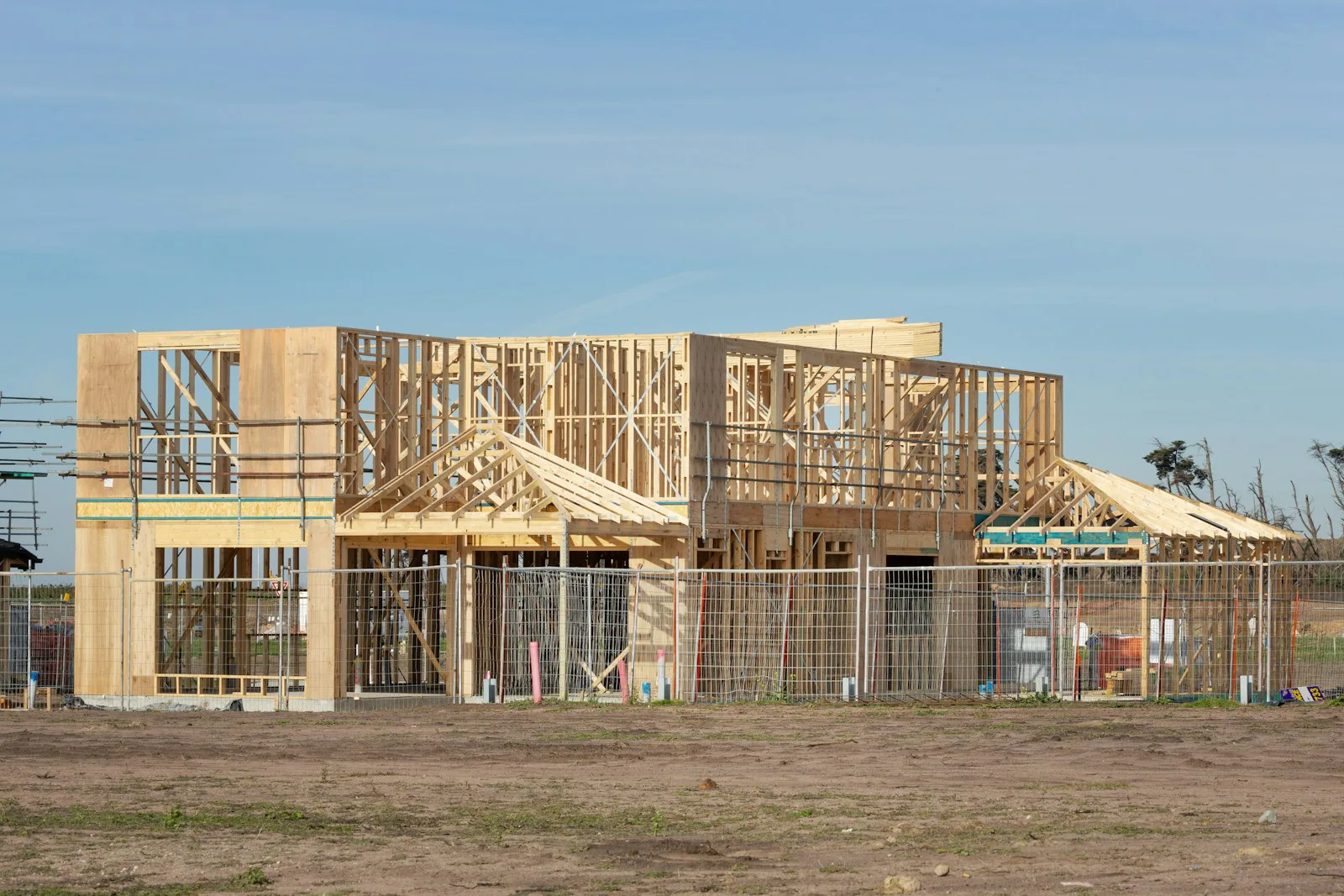
How much does it cost to build a duplex in 2026?
There is no official national duplex build-cost figure. For context, the ABS average approval value for a new house was $517,430 in 2025-26 (Australian Bureau of Statistics, 2026). That is up 5.0% on $492,931 the year before.
That benchmark has clear limits. It is recorded at the approval stage, so it is not a contract price or the final amount paid. GST is included. The ABS says these values “should exclude the value of land, demolition and landscaping but include site preparation costs associated with building activity” (Australian Bureau of Statistics, 2026).
Why the house benchmark is not a duplex estimate
The ABS counts houses separately from other residential buildings. That category includes “semidetached, row or terrace houses or townhouses…” (Australian Bureau of Statistics, 2025). An attached duplex is two homes sharing a common wall, in what New South Wales planning describes as a semi-detached configuration (NSW Department of Planning, Housing and Infrastructure, 2025). That places it with the semi-detached side of that category, not with houses.
The two sit in different ABS building categories. The house figure is context, not a duplex estimate.
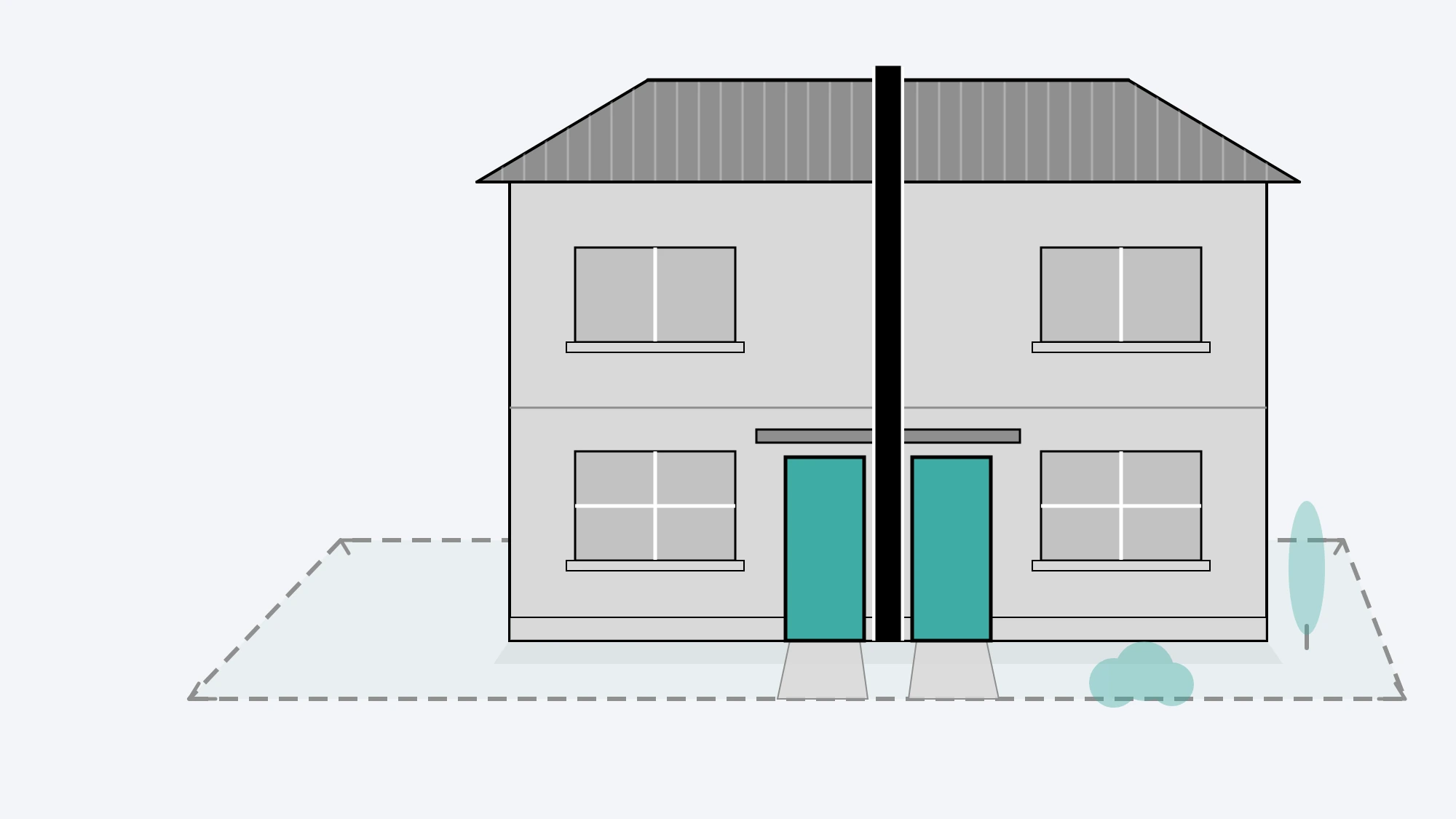
What makes up the real project cost
A usable duplex budget is a total project cost, not a construction quote. Count the construction contract, site preparation and any demolition, then design, consultants and approvals. Add land and external works such as landscaping where relevant, taxes and duty treatment, finance and holding costs over the project, and a contingency you set before you sign. Not all of these sit inside an ABS approval value or a builder’s headline quote (Australian Bureau of Statistics, 2026).
Which way are build costs moving, and where?
Upward, and at very different speeds by state. ABS house construction output prices rose 2.0% in the June quarter of 2026 and 5.9% over the year (Australian Bureau of Statistics, 2026). That series measures price movement, not the cost of a particular duplex. And the national figure hides most of the story.
Over that same year, prices rose 11.5% in Tasmania and 8.8% in Western Australia. South Australia recorded 8.5%, Queensland 8.0%. Victoria recorded 3.7%, New South Wales 4.8%, the Northern Territory 4.6% and the ACT 5.0%. Tasmania's annual increase was roughly three times Victoria's.
Two series get confused here. Output prices are what builders charge. Input prices are what builders pay for materials and labour. Those rose 2.1% in the quarter and 3.8% over the year (Australian Bureau of Statistics, 2026). The ABS prices six Australian capitals separately: Sydney and Brisbane led quarterly input rises at 2.3% each, Hobart trailed 1.8%. Master Builders Australia (2026) puts the longer arc bluntly: the cost of building a home “is now more than 50 per cent higher than it was before the pandemic”. The ABS price series carries no such comparison, so treat it as an industry estimate rather than an official series.
The official long view is about output per hour rather than prices. The Productivity Commission (2025) found that across Australia “we are completing half as many homes per hour worked as we did in 1995”. Adjusted for bigger, better houses, construction productivity is 12% lower, while the wider economy gained 49%.
How do stamp duty and GST change when you build?
Stamp duty and GST change for different reasons when you build. Duty can fall on the land alone rather than the finished home. The outcome can depend on how the land and the building work are contracted, and the test differs by state. GST turns on whether the sale is taxable, covered below.
Three states, three different rules
Revenue NSW spells out both sides. Where the vendor procures the construction before transfer, “ad valorem duty is payable on the consideration for both the land and improvements” (Revenue NSW, 2000, still the current ruling). Ad valorem means charged on value. Where the vendor is “neither selling a completed house, nor erecting improvements prior to completion, nor procuring the construction of improvements prior to completion”, duty is assessed as though the land were unimproved. So a turnkey package, a finished dwelling handed over, can attract duty on the whole improved value. Buying the land and contracting the build yourself can produce a different duty outcome.
Victoria gets to a similar place by a different route. Its off-the-plan concession “subtracts construction costs that have been incurred after you sign your contract from the property's contract price” (State Revenue Office Victoria, 2026). The examples here cover New South Wales, Victoria and Queensland. Duty rules differ elsewhere, so check the relevant state or territory revenue authority.
Queensland's first-home vacant-land concession can wipe duty out entirely for agreements from 1 May 2025 (Queensland Revenue Office, 2026). But one condition should stop a duplex buyer cold: you must “only build 1 home” (Queensland Revenue Office, 2026). A duplex is two dwellings. That reads like a disqualification. A second condition tightens it further: you have to move in within two years of settlement. The page states that this time “cannot be extended” (Queensland Revenue Office, 2026). Nothing there addresses duplexes directly, so ask the Queensland Revenue Office before you rely on it.
GST sits inside the builder's price
Selling an existing home is input-taxed and carries no GST. Sell a new one and you are “generally making a taxable sale” (Australian Taxation Office, undated). GST usually doesn't show up as a line item, because it sits inside the builder's price. Whether any is recoverable is a question for your accountant. Your conveyancer or solicitor confirms how any of this applies to your contract. The planning side sits with dual occupancy rules.
How long could a duplex build take?
On the closest ABS proxy, longer than a house. New townhouses averaged 3.91 quarters from commencement to completion in 2024-25, against 3.07 for new houses (Australian Bureau of Statistics, 2025). The ABS publishes no duplex duration series, so the townhouse series is used here only as a proxy.
Townhouses sit in the same broad ABS category as the attached duplex form. The ABS data cube splits that category into townhouses and apartments, the nearest published split. Sharing a broad category makes townhouses more relevant than houses; it does not make the townhouse average a duplex estimate. Across Australia the ABS reports approval to commencement separately: 1.03 quarters for townhouses, 0.76 for houses.
| Stage | New houses | New townhouses (ABS) |
|---|---|---|
| Approval to commencement | 0.76 | 1.03 |
| Commencement to completion | 3.07 | 3.91 |
State and territory townhouse averages for the same stage ran from 2.62 quarters in the Northern Territory to 5.03 in South Australia. Queensland sat at 3.03, New South Wales 3.70, Tasmania 3.79, the ACT 3.81, Victoria 4.15 and Western Australia 4.54. These figures still aren't the full project timeline. The completion clock starts at commencement, and design and the approval process happen before it, uncaptured. Your real timeline is longer than these figures suggest. A longer build can increase construction-loan interest and other holding costs, depending on how the project is financed. Model that cost on your own loan, drawdown and housing costs, not a generic monthly allowance.
What a warranty cap won't cover if your builder fails
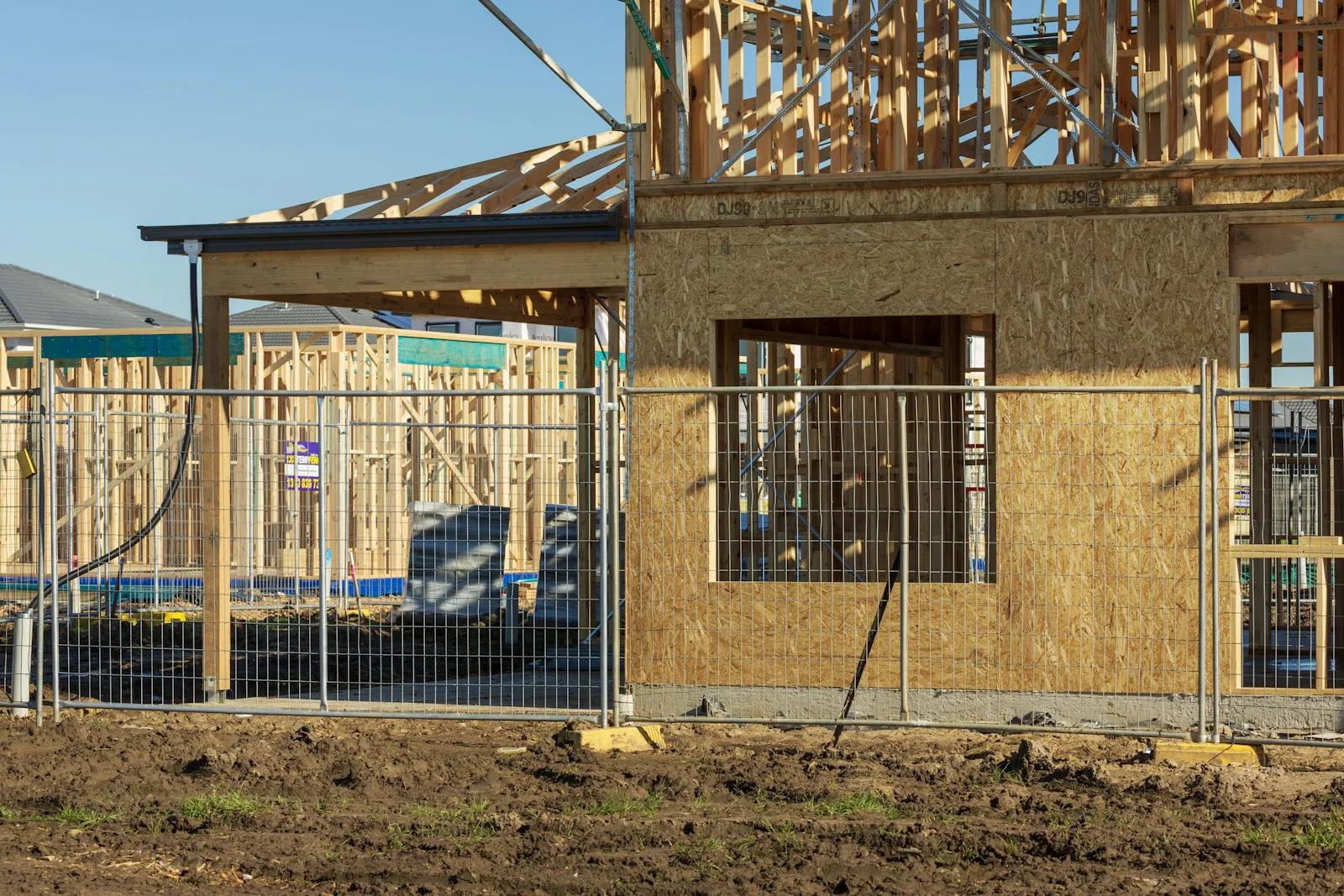
The full building-contract price. Home warranty insurance is last-resort money for finishing incomplete work and fixing defects, not a refund of what you agreed to pay your builder. The portion for finishing an unfinished build can be capped below the headline cover. The risk it backstops is real: construction led insolvency appointments across all industries in the eleven months to 31 May 2026, at 24.4% of the total (Australian Securities and Investments Commission, 2026). Read that as a share of appointments, not a builder failure rate.
| State | Published cover figure | What the cover is for | Cover to finish an unfinished build | Required on work above |
|---|---|---|---|---|
| Victoria | $300,000 maximum | Structural defects for six years, non-structural for two | Limited to 20% of the original contract price | $16,000 |
| Queensland | $200,000, or $300,000 with optional top-up | A maximum applies to each category of loss | Not stated in the cited source | Not stated in the cited source |
| New South Wales | At least $340,000 must be held, a minimum requirement rather than a stated maximum payout | Incomplete work and defect rectification, as a last resort | Not stated in the cited source | $20,000 |
The scheme has been tested at scale in Victoria. When Porter Davis Homes became insolvent in March 2023, claims to the Victorian Managed Insurance Authority “rose sharply in 2022-23 and remained relatively high in 2023-24” (Victorian Auditor-General's Office, 2025). Between 2019-20 and 2023-24 the authority received 14,342 claims in Victoria, with a median accepted settlement of $34,942.
For an unfinished build, test the gap. Compare what another builder would charge to finish the job with the completion cover your state's scheme provides. Your state regulator and solicitor confirm what your policy covers.
What NSW contract rules protect before you pay
Some protection arrives before any insolvency, in the contract itself. In New South Wales, a builder generally can't lift the price at will. In most cases you cannot be charged more without “a genuine change to the scope of work” (Building Commission NSW, 2026). Other valid reasons under the contract or building law can apply too. Read those clauses closely before you sign anything. Cover is required above $20,000, and must be in place before the builder asks for any payment. A certificate has to reach you too, and the deposit is capped at 10%. Pay early or off-schedule and that money is “generally not covered” (NSW Government, undated).
Buy established or build: how to weigh the cost to build a duplex
Weigh your total project cost against comparable established duplexes where you are looking, not a national average. Build price against purchase price is only the starting sum. It leaves out the rest of the budget this guide has assembled: site works, approvals and duty treatment, finance and holding costs, and the contingency.
How to compare duplex tenders
Compare tenders by scope and exclusions as well as their totals. Check whether land and site costs, demolition, landscaping, approvals and professional fees sit inside or outside each price. Tenders treat them differently. The contract carries the rest. Insist on a fixed price with the scope written out. Insist too that variations go in writing, spelling out “the cost implications of the variation and their impact on the overall contract price” (Building Commission NSW, 2026). Progress payments “must match the work carried out” (NSW Government, updated April 2026). That is the standard New South Wales sets. Check that the contract you sign reflects the scope, price and payment schedule you agreed.
What to do next
There is no official national duplex build-cost figure to plug into this decision. What the official data gives you is direction, timing and the costs a headline quote can leave out. The number that decides build or buy is your total project cost, set against established duplexes in the same market. It runs from site, design and approvals through construction, duty and GST treatment, finance and holding costs, and a contingency. Work the decision in order.
- Check the block first. A block that won't take two dwellings ends the conversation: check whether your block allows a duplex.
- Take comparable tenders and build your project total. Compare them by scope and exclusions, and add the costs that sit outside the building contract.
- Test the total against your borrowing position. Use how banks calculate borrowing power, not a builder's estimate. Your broker confirms what you can fund.
- Confirm the duty and contract position before you commit. Your conveyancer or solicitor confirms the duty treatment, and the state revenue office confirms any concession.
A knest.ai property report flags what the site itself brings to a build: flood and bushfire exposure, zoning, power lines and noise. Worth knowing before you commission a design.
View a sample reportFrequently asked questions
Is it cheaper to build a duplex than buy one?
No official comparison exists, because the ABS publishes no duplex build cost. The workable version is local and total: build up your whole project cost — tender, duty treatment, embedded GST, finance and holding costs — and set it against comparable established duplexes where you are looking. National averages are scale, not comparison: the ABS's $517,430 average approval value for a new house excludes land, and its $1,111,100 preliminary mean price covers the whole dwelling stock. Neither figure is duplex-specific or local.
How much does it cost to build a duplex in New South Wales?
The ABS publishes no state-level duplex figure. What the ABS does show is direction: house construction prices in New South Wales rose 4.8% over the year to June 2026, below Tasmania at 11.5% and above Victoria at 3.7%.
Do you pay stamp duty on a duplex build?
It depends who contracts the building work, not simply whether you bought land. Revenue NSW assesses duty on land and improvements where the vendor procures the construction. Rules differ by state, so confirm your position with the relevant state revenue office.
What happens to my money if my builder goes under mid-build?
Home warranty cover pays as a last resort and is capped: $300,000 in Victoria, and $200,000 for each category of loss in Queensland, on a page last updated in 2021. In New South Wales, builders must hold cover of at least $340,000, a minimum requirement rather than a stated maximum payout. In Victoria, cover to complete an unfinished build is limited to 20% of the contract price.
Sources
- Australian Bureau of Statistics, Dwelling approvals rise in June 2026, 30 July 2026, retrieved 2026-08-19, https://www.abs.gov.au/media-centre/media-releases/dwelling-approvals-rise-june-2026
- Australian Bureau of Statistics, Building Approvals Australia methodology, April 2026, retrieved 2026-08-19, https://www.abs.gov.au/methodologies/building-approvals-australia-methodology/apr-2026
- Australian Bureau of Statistics, Building Activity Australia methodology, June 2025, retrieved 2026-08-19, https://www.abs.gov.au/methodologies/building-activity-australia-methodology/jun-2025
- Australian Bureau of Statistics, Producer Price Indexes Australia, June quarter 2026, 31 July 2026, retrieved 2026-08-19, https://www.abs.gov.au/statistics/economy/price-indexes-and-inflation/producer-price-indexes-australia/latest-release
- Australian Bureau of Statistics, Building Activity Australia, average dwelling completion and commencement times, June 2025 reference period, released 15 October 2025, retrieved 2026-08-19, https://www.abs.gov.au/statistics/industry/building-and-construction/building-activity-australia/jun-2025
- Service NSW, Apply for home building compensation cover, undated, retrieved 2026-08-28, https://www.service.nsw.gov.au/transaction/apply-for-home-building-compensation-cover
- NSW Department of Planning, Housing and Infrastructure, Unpacking low-rise housing, 21 February 2025, retrieved 2026-08-28, https://www.planning.nsw.gov.au/policy-and-legislation/housing/low-and-mid-rise-housing-policy/unpacking-low-rise-housing
- Australian Bureau of Statistics, Total Value of Dwellings, March quarter 2026, retrieved 2026-08-19, https://www.abs.gov.au/statistics/economy/price-indexes-and-inflation/total-value-dwellings/latest-release
- Australian Taxation Office, Residential premises, retrieved 2026-08-19, https://www.ato.gov.au/businesses-and-organisations/gst-excise-and-indirect-taxes/gst/when-to-charge-gst-and-when-not-to/input-taxed-sales/residential-premises
- Australian Securities and Investments Commission, Corporate Insolvency Update Issue 40, June 2026, retrieved 2026-08-19, https://www.asic.gov.au/about-asic/corporate-publications/newsletters/asic-corporate-insolvency-update/asic-corporate-insolvency-update-issue-40-june-2026/
- Revenue NSW, Revenue Ruling DUT 018, dutiable transactions over land and improvements, retrieved 2026-08-19, https://www.revenue.nsw.gov.au/help-centre/resources-library/rulings/duties/dut018
- State Revenue Office Victoria, Understanding the off-the-plan duty concession, retrieved 2026-08-19, https://www.sro.vic.gov.au/buying-property/land-transfer-stamp-duty/concessions-exemptions-and-waivers/plan-duty-concession-0/understanding-plan-duty-concession
- Queensland Revenue Office, First home vacant land concession, updated 31 July 2026, retrieved 2026-08-19, https://qro.qld.gov.au/duties/transfer-duty/concessions/homes/first-home-vacant-land/
- Consumer Affairs Victoria, Domestic building insurance, retrieved 2026-08-19, https://www.consumer.vic.gov.au/licensing-and-registration/builders-and-tradespeople/running-your-business/warranties-and-insurance/domestic-building-insurance
- Victorian Auditor-General's Office, Domestic Building Insurance, 14 May 2025, retrieved 2026-08-19, https://www.audit.vic.gov.au/report/domestic-building-insurance
- Queensland Building and Construction Commission, Maximum amounts covered, retrieved 2026-08-19, https://www.qbcc.qld.gov.au/home-owner-hub/queensland-home-warranty-scheme/maximum-amounts-covered
- NSW Government, Protecting yourself in case of builder insolvency, retrieved 2026-08-19, https://www.nsw.gov.au/housing-and-construction/building-or-renovating-a-home/protecting-yourself-case-of-builder-insolvency
- NSW Government, Contracts for residential building work, updated 29 April 2026, retrieved 2026-08-19, https://www.nsw.gov.au/housing-and-construction/building-or-renovating-a-home/preparing/contracts
- Building Commission NSW, Concerned about rising fuel costs? Your building contract still protects you, 28 April 2026, retrieved 2026-08-19, https://www.nsw.gov.au/departments-and-agencies/building-commission/news/concerned-about-rising-fuel-costs-your-building-contract-still-protects-you
- Master Builders Australia, Middle East conflict pushes building materials inflation close to 3-year high, 31 July 2026, retrieved 2026-08-19, https://masterbuilders.com.au/middle-east-conflict-pushes-building-materials-inflation-close-to-3-year-high/
- Productivity Commission, Housing construction productivity: Can we fix it?, 16 February 2025, retrieved 2026-08-19, https://www.pc.gov.au/inquiries-and-research/housing-construction/ signature: Eleanor Hayes — Editor, knest.ai disclaimer: General information only. This article is general information for Australian home buyers. It isn't personal financial, credit, legal or tax advice, and it isn't a property valuation. Building costs, duty rules and home warranty schemes differ by state and territory and change over time, and some scheme details, such as any New South Wales maximum payout, are not published on an accessible official page and are not stated here. Check your own position with a licensed conveyancer or solicitor, your broker, the relevant state revenue office and the relevant state building regulator. knest.ai is an AI property-intelligence platform that supports buyer judgment. It isn't a builder, a broker, a conveyancer or a valuer, and it doesn't replace one.